Skip to content
Walt MercerThe West Milton Iron Shelf

Walt Mercer on cast iron

Learn what the iron says before you decide

Three practical books for reading a pan’s marks, cooking with the skillet you have, and choosing what belongs in your collection.

Sound on — Walt Mercer explains the three-book set in 2 minutes.

Identifying Cast IronCooking with Cast IronCollecting Cast Iron

Watch with sound on for Walt’s short introduction, then browse the full written offer below.

Walt’s video is unavailable right now. Everything it covers is written below.

Read the transcript

You flip a skillet over at an estate sale, and there's a number on the bottom. You might be wondering what it tells you. Less than you'd think.

A number like Griswold's thirteen is a real clue, and the pan still has more to say. Who made it, what shape it's in, and whether it belongs in your collection are three different questions.

I'm Walt Mercer, and I put three books together so you can answer them one at a time. The set is called Cast Iron, Well Kept.

Identifying Cast Iron answers the first question. On page eleven, Read the Bottom starts with the size number and works outward, and the five step order on page twelve keeps the first mark from deciding everything. On page fifty-two, Condition Without Guesswork checks for cracks first, then whether the pan sits flat, and only then seasoning, rust, and pitting.

Cooking with Cast Iron answers the second. You heat the iron patiently, build seasoning through use, and keep the skillet ready for the next meal. And starting on page thirty-five, the thin metal spatula gets a chapter of its own, with how to slip a thin edge under the food at a low angle instead of forcing it.

Collecting Cast Iron answers the third. You decide what belongs in your collection before you leave the house, and you work an estate sale with a clear head. On page twenty-nine, Research Prices Quietly and Well shows you how to judge a pan by completed sales instead of asking prices. And starting on page forty-two, you learn to make a first record before you leave the sale, with the date, the place, and what the seller told you, kept separate from what you actually know.

That's more than two hundred pages, written to be used with the pan in your hands. Start with Identifying, put a skillet to work with Cooking, and finish with Collecting.

The complete set is twenty seven dollars. One payment, no subscription, and you download all three books right away.

Read them for thirty days. If they're no use to you, contact support within thirty days for a full refund, no questions asked, and you keep the PDFs.

Get Cast Iron, Well Kept using the button below this video.
Instant · 30-day money-back guarantee, No questions asked · One payment, no subscription

3 Books · 209 Pages · 28 Chapters · 9 Methods · 6 Checklists · 4 Glossary terms

3Books
209Pages
$27One payment, no subscription
3030-day money-back guarantee

The West Milton Iron Shelf

A pan can raise more questions than it answers

I know the feeling of turning a skillet over and finding marks that invite a closer look. These books give you a steady way to sort observation from guesswork, at the sale, stove, or kitchen table.

  • A worn logo, town name, or pattern number catches your eye, but you are not sure what it can actually tell you.
  • Rust, a possible crack, or a pan that rocks on the counter makes it hard to judge condition calmly.
  • Food sticks, and you are wondering whether the trouble is heat, oil, timing, or seasoning.
  • At an estate sale, an asking price and an interesting story leave you unsure what a pan is worth to you.
Get the three-book set $27

Instant · 30-day money-back guarantee, No questions asked · One payment, no subscription

The books

The West Milton Iron Shelf

Identifying Cast Iron

The books / 01

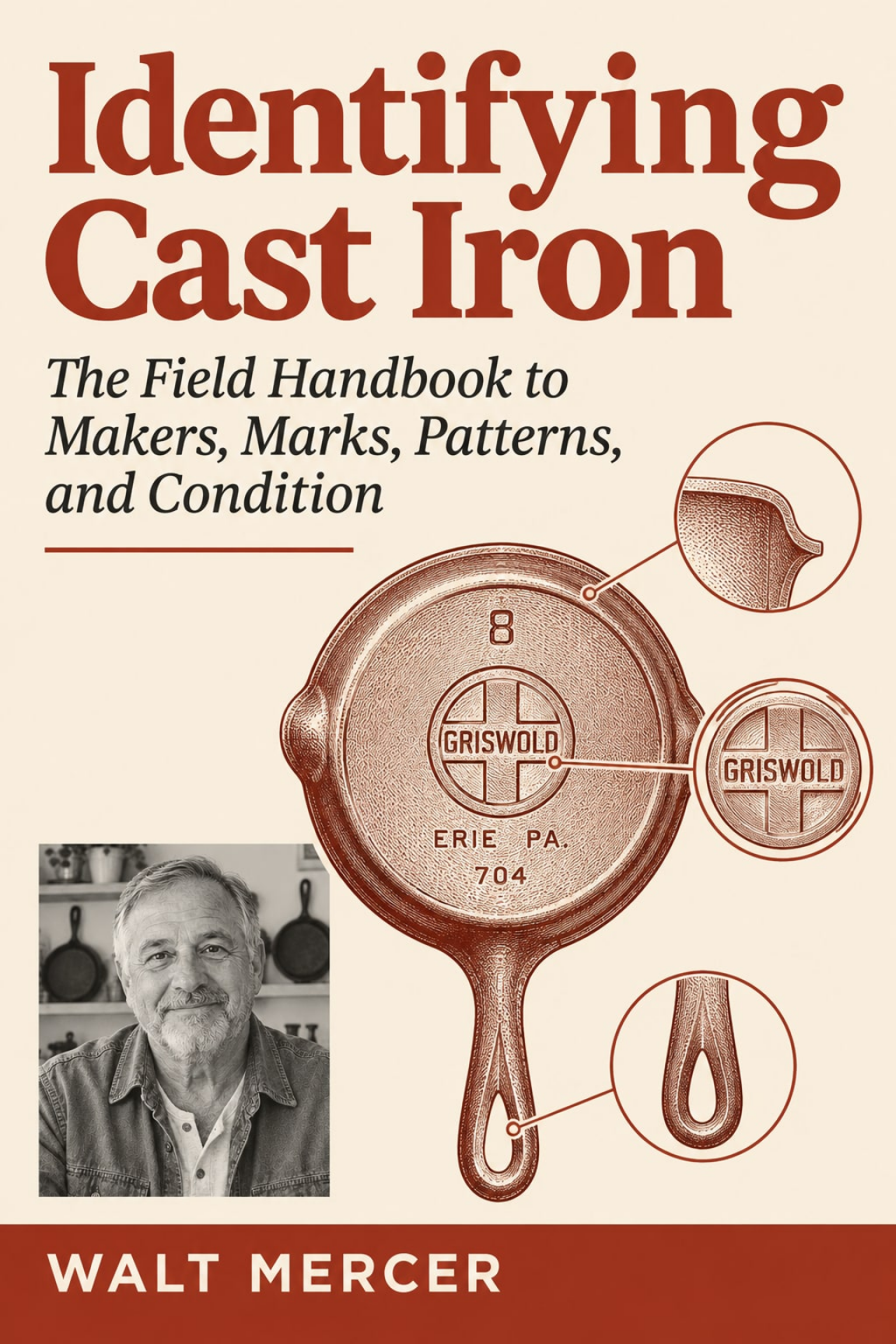
Identifying Cast Iron

The Field Handbook to Makers, Marks, Patterns, and Condition

Read the whole pan before letting one mark tell its story.

Begin with the pan itself, then read the marks in a careful order. In “Before the Mark” and “Read the Bottom,” you’ll record a pan’s shape, size, and visible details before interpreting its words, numbers, and casting features. “Names, Logos, and Patterns” and “Ohio Names Close to Home” put maker names and local marks—including Favorite Piqua Ware—in context without treating one clue as proof. “Condition Without Guesswork” covers cracks, warp, worn finishes, surface rust, and deep pitting. Identifying Cast Iron has 73 pages and eight chapters for curious owners and shoppers who want a grounded description, not a guess dressed up as certainty.

Selected chapters

  1. Before the Mark
  2. Read the Bottom
  3. How a Pan Was Made
  4. Names, Logos, and Patterns
  5. Ohio Names Close to Home
  6. What Marks Can Date
  7. Condition Without Guesswork
  8. Lids, Odd Pieces, and the Whole Picture
Cooking with Cast Iron

The books / 02

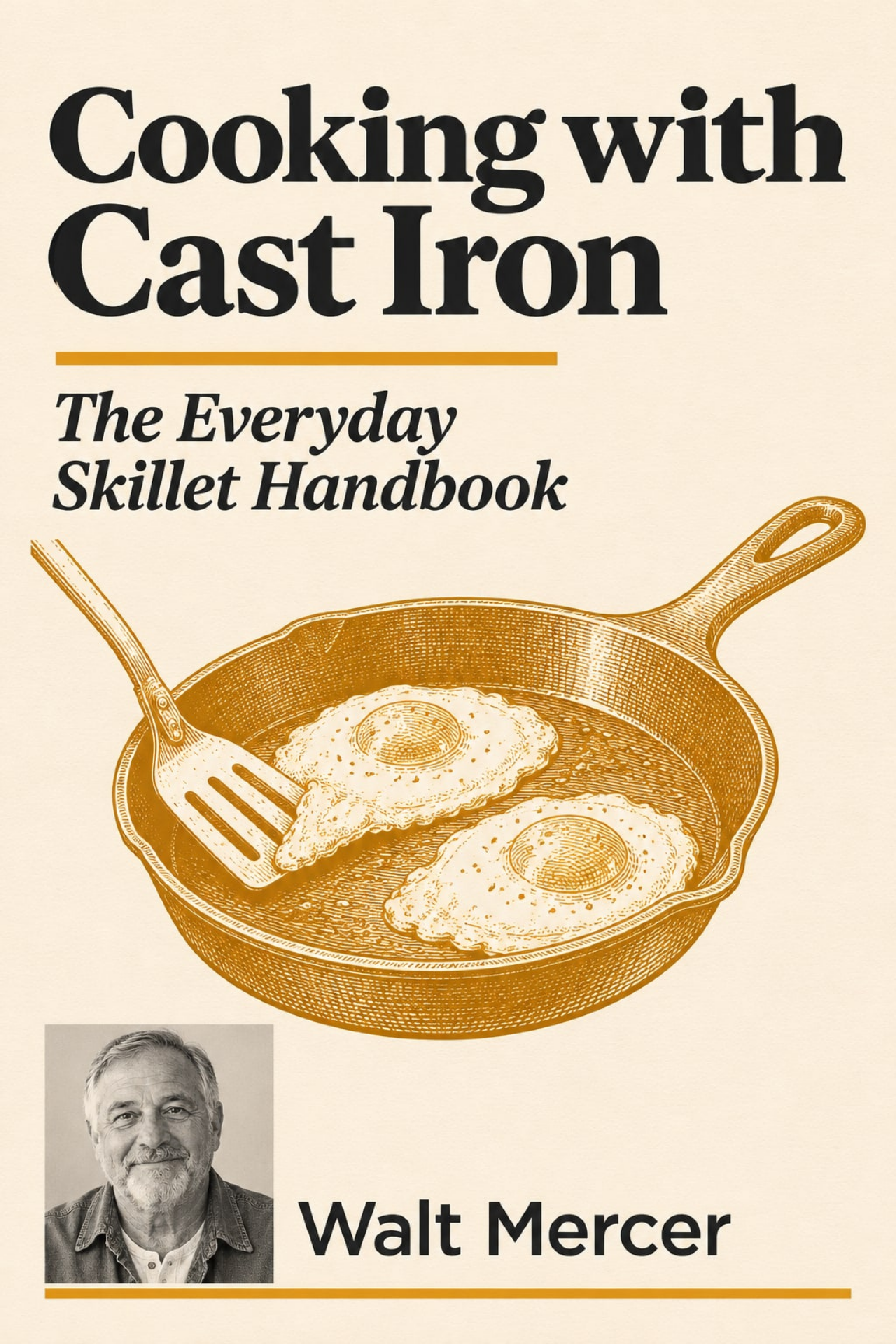
Cooking with Cast Iron

The Everyday Skillet Handbook

When food sticks, check heat, oil, and timing before changing the seasoning.

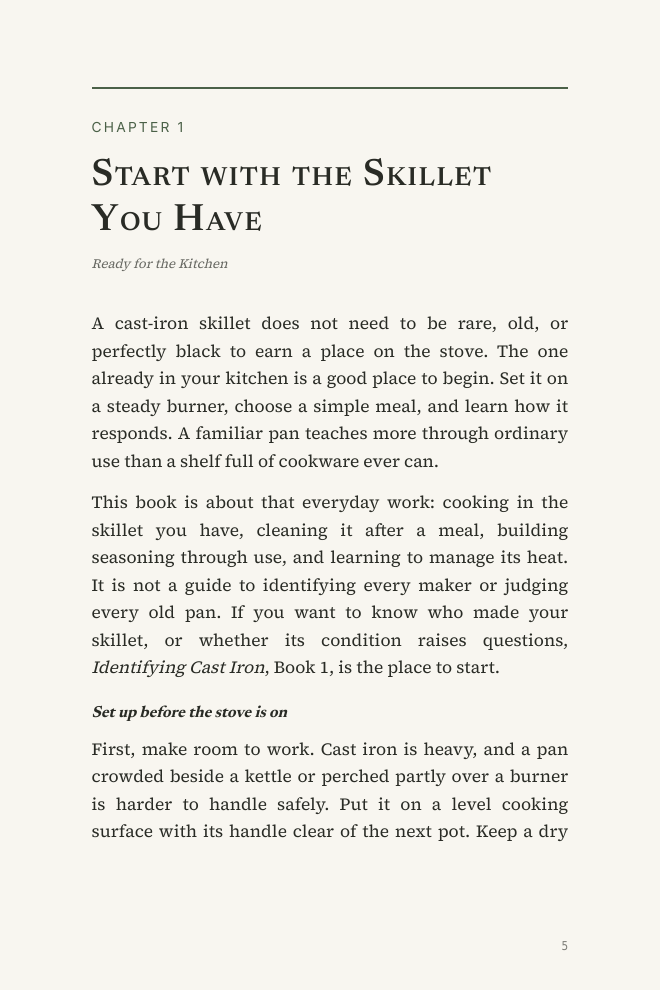
This is the book to keep near the stove when you want to cook with the skillet you already own. Across ten chapters, it moves from ordinary cleanup and seasoning to gradual preheating, sticking, and the thin metal spatula I favor. “When Food Sticks, Check the Cooking” helps you examine heat, oil, and timing before adding more seasoning; “Breakfast Is a Good Place to Begin” starts with forgiving foods such as bacon and fried potatoes. You’ll also find guidance for searing, sautéing, and choosing when another pan suits the meal better. Cooking with Cast Iron has 66 pages of everyday methods, including three checklists and a recipe.

Selected chapters

  1. Start with the Skillet You Have
  2. Clean It, Dry It, Put It Back to Work
  3. Seasoning Grows Through Use
  4. Give the Iron Time to Heat
  5. When Food Sticks, Check the Cooking
  6. The Thin Metal Spatula
  7. Breakfast Is a Good Place to Begin
  8. Sear, Sauté, and Finish the Meal
Collecting Cast Iron

The books / 03

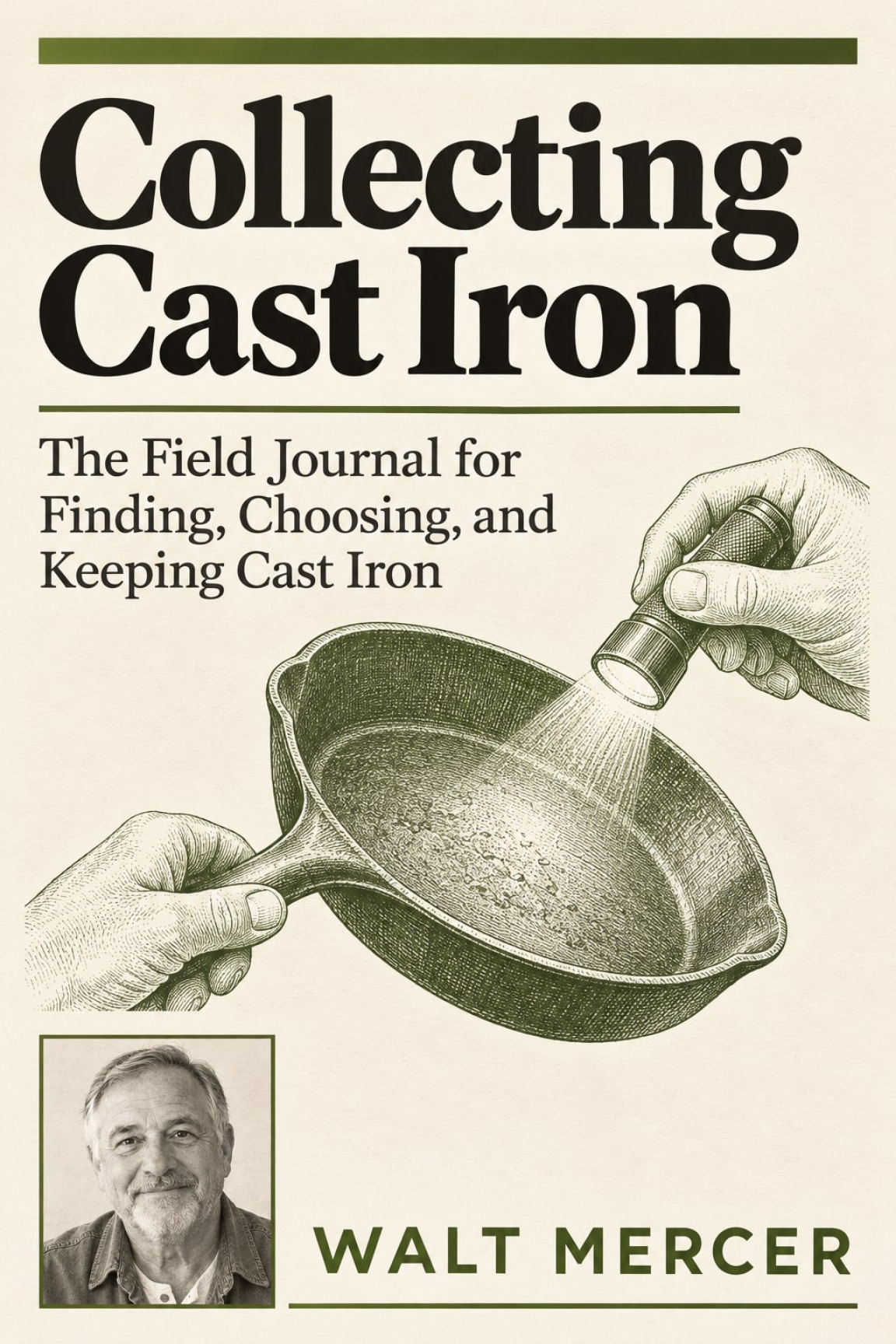
Collecting Cast Iron

The Field Journal for Finding, Choosing, and Keeping Cast Iron

Use completed sales to inform your decision, and keep a pan’s story with it.

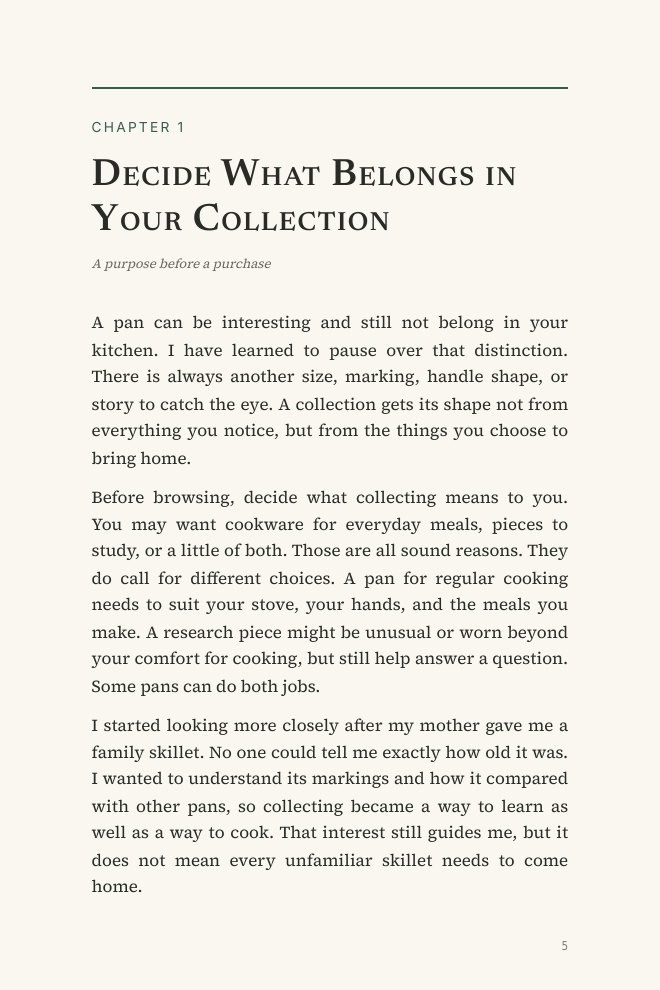
Collecting Cast Iron is for the person who enjoys the hunt but wants to bring home pieces with intention. Its ten chapters cover deciding what belongs in your collection, browsing estate sales and shops, bidding with a limit, and researching prices from completed sales rather than hopeful listings. “Make the Offer, or Let It Go” keeps negotiation polite and practical; “Bring Home the Pan and Its Story” and “Build a Provenance Trail” show how to record what a seller said while keeping uncertain details uncertain. With 70 pages, a table, and two checklists, this field journal helps you keep the object, the purchase, and its known history straight.

Selected chapters

  1. Decide What Belongs in Your Collection
  2. At the Estate Sale
  3. Bidding Without Losing Your Head
  4. Shops, Rummage Sales, and the Worth of a Stop
  5. Research Prices Quietly and Well
  6. Make the Offer, or Let It Go
  7. Bring Home the Pan and Its Story
  8. Build a Provenance Trail
Get the three-book set $27

Instant · 30-day money-back guarantee, No questions asked · One payment, no subscription

Selected chapters

Three books, three distinct jobs

Read them in order if you want the full path: first understand the object, then cook with it, then decide what to seek out and keep.

  1. Book 1: “Before the Mark”

    Start with shape, size, handles, rim, and cooking surface. Record what you can see before turning over the pan and interpreting its marks.

  2. Book 2: “Start with the Skillet You Have”

    Take a sound skillet into the kitchen. Learn routine cleanup, seasoning through use, gradual heating, and what to check when food sticks.

  3. Book 3: “Decide What Belongs in Your Collection”

    Set your collecting direction before the next sale. Browse patiently, compare completed prices, and preserve what you learn about a pan’s source.

Get the three-book set $27

Instant · 30-day money-back guarantee, No questions asked · One payment, no subscription

Look inside

See the work before you buy

Open a page and read it.

3 Books · 209 Pages · 28 Chapters · 9 Methods · 6 Checklists · 4 Glossary terms

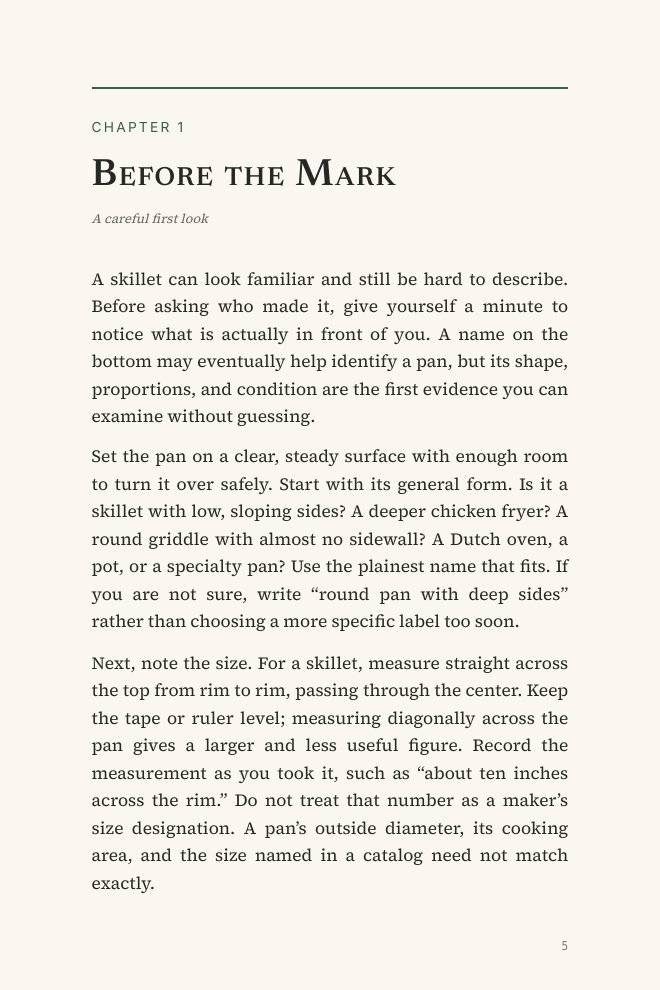
Page 5 — Before the Mark
Page 5 — Before the Mark ↗
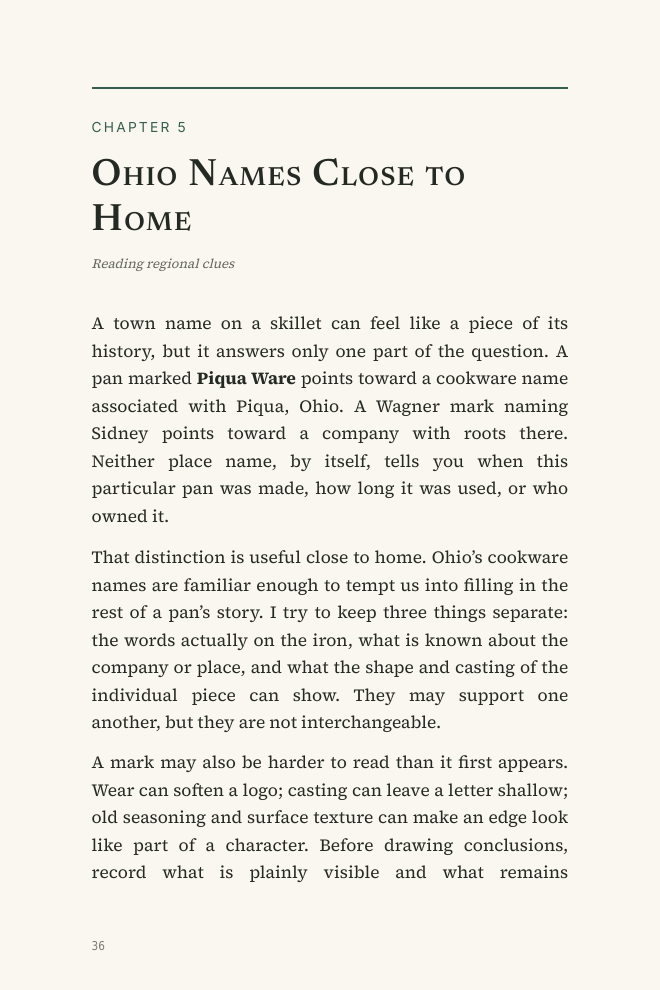
Page 36 — Ohio Names Close to Home
Page 36 — Ohio Names Close to Home ↗
Page 5 — Start with the Skillet You Have
Page 5 — Start with the Skillet You Have ↗
Page 5 — Decide What Belongs in Your Collection
Page 5 — Decide What Belongs in Your Collection ↗
Get the three-book set $27

Instant · 30-day money-back guarantee, No questions asked · One payment, no subscription

What you get

The complete offer

You get all three books: identification first, everyday cooking second, and thoughtful collecting third. Each ebook is available in PDF and EPUB.

Identifying Cast IronCooking with Cast IronCollecting Cast Iron

Your order

Cast Iron, Well Kept

$27

Three ebooks in PDF and EPUB: Identifying Cast Iron (73 pages), Cooking with Cast Iron (66 pages), and Collecting Cast Iron (70 pages).

3 Books · 209 Pages · 28 Chapters · 9 Methods · 6 Checklists · 4 Glossary terms

  • Identifying Cast Iron · 73 · PDF + EPUB
  • Cooking with Cast Iron · 66 · PDF + EPUB
  • Collecting Cast Iron · 70 · PDF + EPUB
  • Instant download: a link to the ebooks appears on the thank-you page right after payment.
Get the three-book set $27

Instant · 30-day money-back guarantee, No questions asked · One payment, no subscription

Walt Mercer

From the author

From my West Milton kitchen

I grew up outside West Milton, in a farmhouse where my father repaired farm equipment and my mother cooked for a crowded table. After several years in Dayton, I came back to Miami County and worked at a family-owned hardware store, starting behind the counter and later managing it. I liked helping people slow down, examine a problem, and find the right part.

My mother gave me a family skillet when I moved into my house outside West Milton. Nobody knew exactly how old it was, and that question led me to pay closer attention to marks, makers, and the pans I found around western Ohio. I still enjoy estate sales, breakfast at home, and notes at the kitchen table. I’d rather leave a gap in a pan’s history than fill it with a story I can’t support.

— Walt Mercer

Get the three-book set $27

Instant · 30-day money-back guarantee, No questions asked · One payment, no subscription

30-day money-back guarantee

Read it and put it to use. If it is not right for you, request your refund within 30 days.

Read the books for 30 days. If they are no use to you, I give the money back. Contact support within 30 days for a full refund, and you keep the PDFs.

No questions asked

Get the three-book set $27

Instant · 30-day money-back guarantee, No questions asked · One payment, no subscription

This is for you if

Who I wrote this for

This is for you if

  • You like practical explanations grounded in the pan you can hold, inspect, or cook with.
  • You want to learn carefully, and you are comfortable treating marks and stories as clues rather than automatic proof.
Get the three-book set $27

Instant · 30-day money-back guarantee, No questions asked · One payment, no subscription

The West Milton Iron Shelf

A closer look, wherever you start

AI-generated illustrations of potential readers.

You found a pan with puzzling marks

Use Identifying Cast Iron to record the whole bottom, compare maker and pattern clues, and keep a date range distinct from an exact year.

AI-generated illustrations of potential readers.

You want your skillet to cook more comfortably

Cooking with Cast Iron gives you a repeatable path through preheating, oil, seasoning, sticking, and the thin metal spatula I reach for.

AI-generated illustrations of potential readers.

You enjoy the search as much as the find

Collecting Cast Iron helps you set a direction, research completed sales, make a friendly offer, and write down what you learn.

AI-generated illustrations of potential readers.

Get the three-book set $27

Instant · 30-day money-back guarantee, No questions asked · One payment, no subscription

The West Milton Iron Shelf

Questions

Do I need experience collecting or cooking with cast iron?

No. The books begin with plain observations and practical kitchen routines. You can start with the skillet you already own, even if you are still learning its marks or how it responds on the stove.

Why pay for books when your videos are free?

The books put the material in an ordered sequence you can return to: 28 chapters across the set, with checklists and tables included in the books. You can look up a step at the counter or stove without relying on a remembered video tip.

What does each book cover?

Identifying Cast Iron is for marks and condition; Cooking with Cast Iron is for everyday heat, seasoning, and meals; Collecting Cast Iron is for browsing, price research, offers, and keeping records. The reading path shows how they fit together.

Can one mark tell me exactly when a pan was made?

That is not how I read a pan. I treat marks and casting features as clues that may support a date range, not as a shortcut to an exact year. The identification book shows how to consider the whole bottom and preserve uncertainty.

What if food sticks to my skillet?

The cooking book asks you to check heat, oil, and timing before adding more seasoning. It covers gradual preheating, waiting for food to release, and using a thin metal spatula with a controlled touch.

Which file formats are included?

All three books are available as PDF and EPUB ebooks.

How does delivery and the refund policy work?

A download link appears on the thank-you page right after payment. You can contact support within 30 days for a full refund, and you keep the PDFs.

Do the books tell me what every pan is worth?

They offer a careful way to research and assess, not a guaranteed value for every piece. In the collecting book, I use completed sale prices rather than asking or listed prices, and I leave room for condition and personal usefulness.

Get the three-book set $27

Instant · 30-day money-back guarantee, No questions asked · One payment, no subscription

Give the pan a fair reading

Start with what you can see, then let the evidence guide what comes next. If that is the kind of cast-iron advice you want at your counter, stove, or next sale, I’d be glad to have you read along.

Get the three-book set $27

Instant · 30-day money-back guarantee, No questions asked · One payment, no subscription